When asked about the current status of health and physical activity, participants with cutaneous melanoma (82%) more frequently reported being fully active or capable of all activities without restriction, compared to participants with acral melanoma (61%) and mucosal melanoma (56%), indicating a generally poorer functional status in participants with these rare melanoma subtypes. A larger percentage of participants with acral and mucosal melanoma also reported greater limitations in work-related activities and self-care.
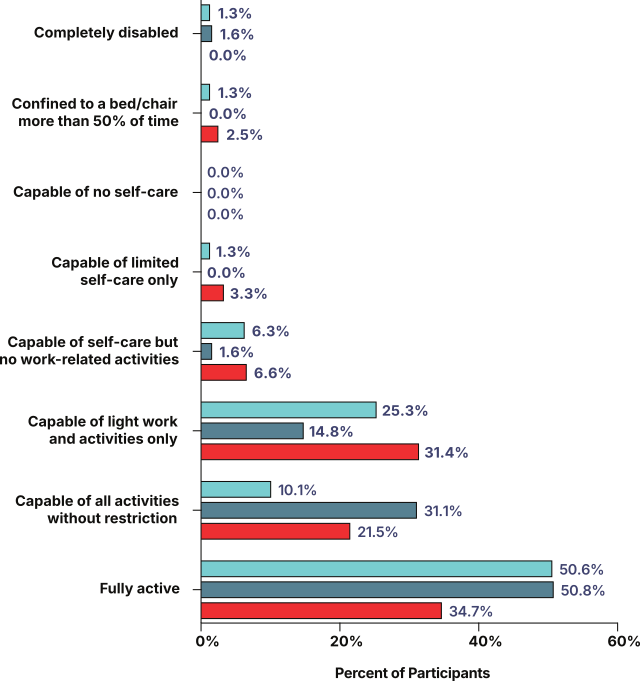
RARE participants shared additional information about how melanoma has affected their current health and ability to participate in social and other activities. Several major themes emerged from their responses.
Participants described a large psychological burden of living with melanoma, whether having a common or rare subtype. Psychological distress was associated with fear of progression or recurrence, anticipation of test results, and enduring lengthy treatment trajectories. Participants also noted their disease led to emotional strains on relationships with family and friends that exacerbated feelings of loneliness and isolation.
Substantial physical burdens of melanoma and associated treatments were described, including fatigue, pain, sleep disruption, and physical weakness. These symptoms contributed to limitations in work, exercise, travel, and social activities with friends and family.
Financial challenges emerged, with participants reporting high out-of-pocket medical expenses, medical debt, and changes to health insurance coverage due to reduced work capacity. Several participants described being forced into early retirement or part-time employment due to their disease or treatments. Travel expenses associated with specialized care or clinical trials further contributed to financial strain.
Participants expressed frustrations with the healthcare system, including limited treatment options, treatments with severe and lasting side effects, delays in diagnosis and care, and barriers to accessing clinical trials.
Despite these challenges, many RARE participants described meaningful shifts in their perspectives of life following their melanoma diagnosis. Participants noted a change in priorities, focusing on more intentional, present-moment living. Some found purpose through advocacy, community involvement, spirituality, or faith. Others found hope in the future—that advances in research will lead to improved care for patients with melanoma.
Currently, the MRA is working on a study to better understand patient quality of life using data collected through RARE.
Overall, the majority of RARE participants expressed that they had adequate social and family support throughout their disease journey. This sentiment was greatest among participants with cutaneous melanoma (95%) and mucosal melanoma (94%), and slightly lower among participants with acral melanoma (85%).
“The RARE Registry is an opportunity for patients to help shape the future of melanoma research. By sharing their experiences with melanoma, patients help investigators and clinicians to identify research priorities, thus accelerating efforts towards improving care and quality of life for current and future patients.”