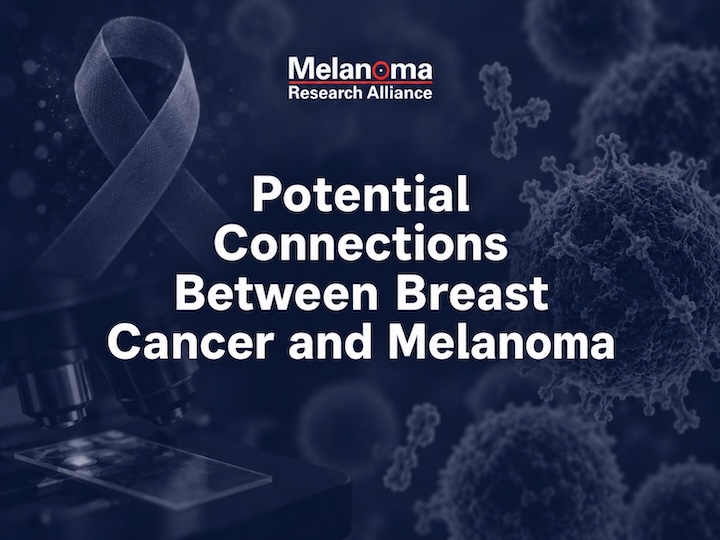
Last month in observation of Gynecological Awareness Month, we explored the intersection of women's health and melanoma: mucosal melanoma, a rare, aggressive melanoma that forms in mucous membranes of the female reproductive tract. The work to be done at this intersection doesn't just stop at mucosal melanoma — research has also shown there may be a relationship between breast cancer and melanoma.
Though there may be a link, more studies are needed. Several groups have Investigated a potential association between melanoma and breast cancer. The strength of the correlation is not clear, because some studies have found a connection, and others have not. First, the association could be partially caused by surveillance bias, or the idea that someone who is already being treated for or has been treated in the past for breast cancer or melanoma is monitored by medical teams more closely than the general population. This means surveillance bias could cause an increase in the detection of a secondary cancer. Another factor could be that the use of radiation and chemotherapy to treat the first cancer can impact the development of the second cancer (Pubmed).
Genetics may also play a part in the association between the two forms of cancer. Mutations in BRCA2, CDKN2A, CDK4, and BAP1 are mutated in breast cancers and melanomas and have been studied to better understand the genetic mutations that breast cancer and melanoma might share. For instance, exploring mutations in CDKN2A, a gene whose variants correlate with anywhere from 40 to 70% risk in developing melanoma, found that the presence of CDKN2A mutations in familial melanoma patients was correlated not just with increased breast cancer prevalence, but pancreatic cancer, too. Some of the associated genetic links may indicate that research in either field has potential to impact patients with both breast cancer and melanoma. As of 2026, the Melanoma Research Alliance has funded several studies exploring the role that BRCA2, CDKN2A, CDK4 or BAP1 might play in melanoma.
What does all this information mean for patients with breast cancer, patients with melanoma, and women's health practices at large? If you are already in the monthly habit of examining yourself for moles or changes to the skin, you could inspect your breast and armpit regions by conducting a breast self-exam to learn what is normal for your body. Though a breast self-exam should not replace recommended routine mammograms or clinical breast exams, any changes like lumps, sore spots, or nipple discharge should be reported to your healthcare provider. In addition to physical self-exams, conversations with family members about any history of breast cancer, melanoma, other cancers and health conditions can equip you with a better understanding of pre-existing risk factors- important information to discuss with your healthcare providers. Your medical team will be able to advise you whether follow-up with a genetics counselor or certain genetic testing would be appropriate.