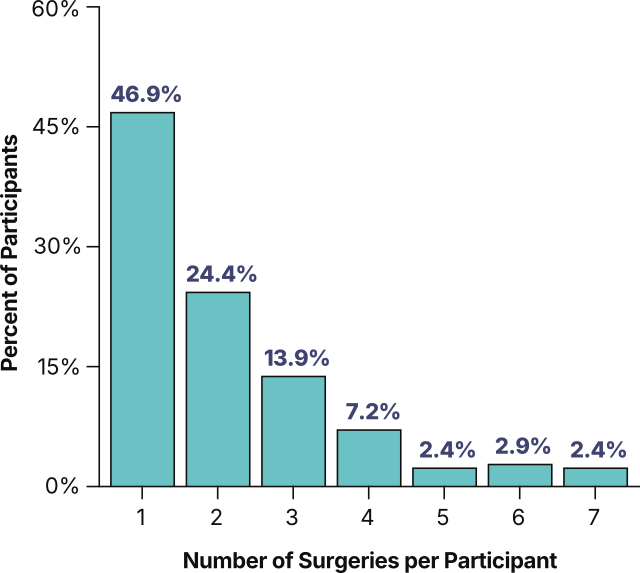
Approximately 95% of participants reported having undergone surgery for their melanoma. On average, participants underwent two surgeries for their melanoma (minimum of one surgery, maximum of seven surgeries), and this was largely consistent across melanoma subtypes.
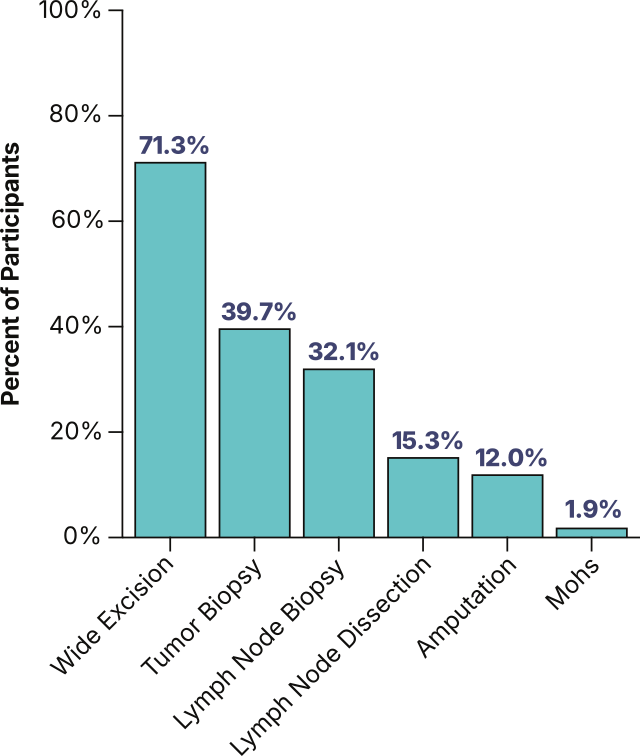
The majority of RARE participants reported having a wide excision surgery (71%), tumor biopsy (40%), sentinel lymph node biopsy (32%), complete lymph node dissection (15%), amputation (12%), or Mohs (2%). Amputation was most frequently indicated by participants with acral melanoma (34%) than those with mucosal melanoma (2%) and cutaneous melanoma (0%).
The first surgical procedure was most often a wide excision surgery (50%) or a tumor biopsy (29%). Most wide excision surgeries were followed by a lymph node biopsy or dissection. Tumor biopsies were most often followed by wide excision surgery.
Generally, RARE participants viewed surgical interventions as highly effective and valuable, and often times as curative, especially in early-stage melanoma.
“When I was diagnosed with acral melanoma in 2019, I found it very difficult to gather accurate information pertaining to survivor rates, recurrence, treatment options, and stories from people who had been through a similar situation. In general, rare melanomas receive very little attention.”

Approximately 29% of RARE participants reported having radiation for treating their melanoma. The most common type of radiation therapy reported was intensity modulated radiation therapy or IMRT (52%), followed by stereotactic radiosurgery or SRS (30%), proton therapy (11%), and intraoperative radiation therapy (6%), among other types of radiation therapy. On average, these participants underwent one course or type of radiation therapy.
Among participants who underwent IMRT, 47% received treatment to the head and neck region, 30% received IMRT as a part of a planned surgery, and 70% received IMRT in conjunction with immunotherapy. Side effects were reported by 81% of participants. 65% reported that the treatment was valuable in treating their melanoma.
Among participants who received SRS, 79% received treatment to the brain, head and neck region, or spine, and 65% received SRS as a part of a planned treatment with immunotherapy. 59% of participants reported side effects and 82% found this type of radiation therapy to be valuable in treating their melanoma.

Over the last two decades, there have been 19 approved treatments for melanoma. These include immunotherapies such as the immune checkpoint inhibitors, oncolytic viral therapy, and more recently a cell-based immune therapy called tumor infiltrating lymphocyte (TIL) therapy. The new approvals also include drugs targeted to inhibit an acquired alteration or tumor biomarker in melanoma called BRAF and drugs that target another protein controlling cell growth in melanoma called MEK. The approved therapies are used to treat advanced and metastatic melanoma, and some treat melanoma in the adjuvant setting (after surgical removal of the tumor) in patients that are at higher risk for disease progression.
Approximately 63% of RARE participants across all subtypes reported being administered an infused or injected medication as a part of their treatment for melanoma. These included the immune checkpoint inhibitors given as monotherapy, Keytruda (Pembrolizumab), Opdivo (Nivolumab), and Yervoy (Ipilimumab), as well as the immune checkpoint drugs given in combination, Yervoy + Opdivo (Ipilimumab + Nivolumab) and Opdualag (Nivolumab + Relatlimab). Therapeutics such as Intron A (Interferon alfa-2b), among others, were also used. Participants reported receiving approximately two infused or injected medications for treating their melanoma.
Nearly 10% of participants reported using intralesional or topical medications, including Aldara/Imiquimod, the oncolytic viral therapy Imlygic (T-VEC), TICE BCG (BCG Live), and Intron A (Interferon alfa-2b). On average, these participants indicated using one type of intralesional or topical medication as a part of their melanoma treatment.
The use of oral medications was reported by 16% of RARE participants. Drugs that are BRAF and MEK inhibitors were used across melanoma subtypes in participants presumably who tested positive for the BRAF tumor biomarker. The oral medications to treat these patients included the BRAF drugs, Braftovi (Encorafenib), Tafinlar (Dabrafenib), and Zelboraf (Vemurafenib), and MEK drugs including Mekinist (Trametinib) and Mektovi (Binimetinib), as well as combinations of BRAF and MEK drugs. Other oral medications given to some participants included Gleevec (Imatinib Mesylate) and Temodar (Temozolomide), among others.

Participants will be able to connect to their Electronic Health Records (EHRs) and upon consent, transfer specific medical information to the RARE Registry. MRA registry staff will abstract clinical data from the EHRs, such as treatment information, which will be linked to the participant’s reported survey responses.
The MRA is committed to supporting research that aims to identify new therapeutic approaches for treating melanoma. Since its founding in 2007, the MRA has dedicated over $31 million to rare melanoma research.
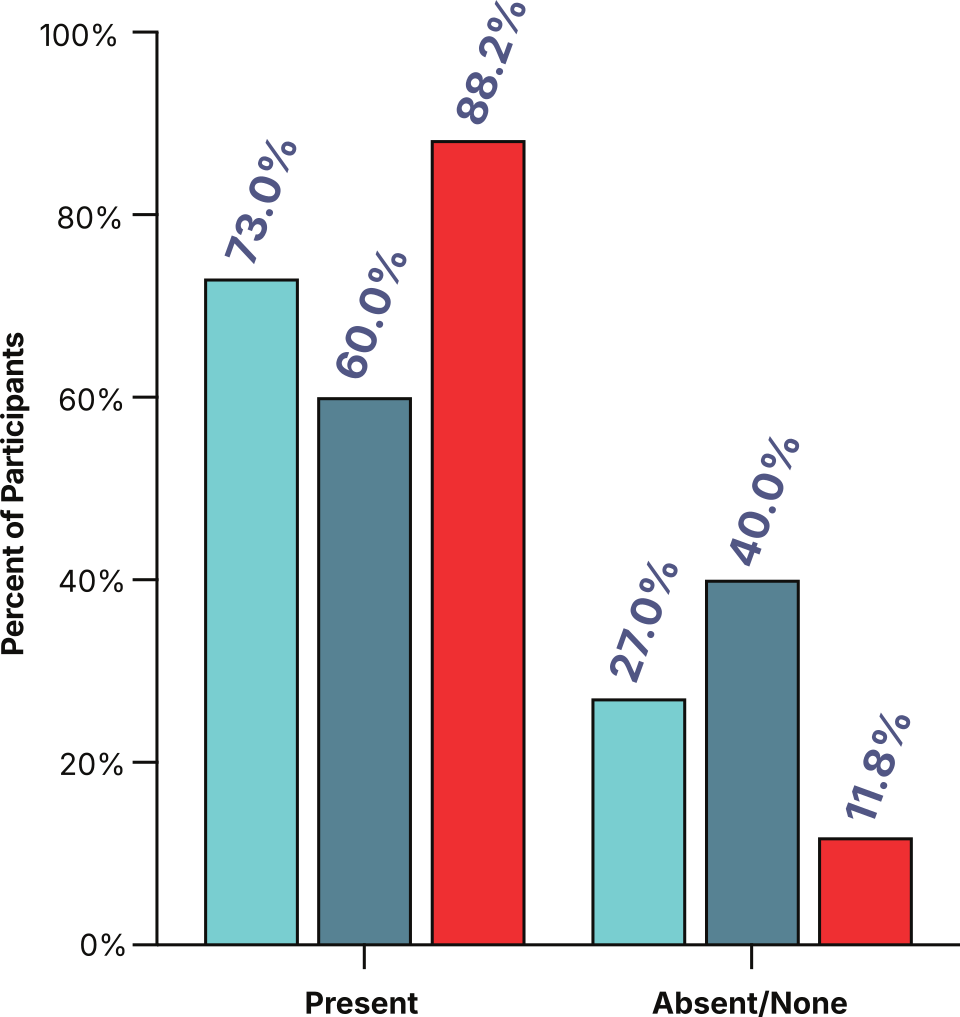
Across melanoma subtypes, most participants (78%) reported experiencing treatment side effects, with the highest proportion having mucosal melanoma (88%), followed by acral melanoma (73%), and cutaneous melanoma (60%).
Collectively, RARE participants reported a wide range of treatment-related side effects, with fatigue being the most consistently described and characterized as severe, persistent, and functionally limiting. Gastrointestinal toxicities such as diarrhea, nausea, vomiting, and colitis, were also commonly noted and described as being disruptive to daily life, and in some cases, requiring long-term management or hospitalization. In addition, participants reported endocrine-related complications, particularly in the context of immunotherapy, highlighting side effects like thyroid disfunction, adrenal insufficiency, and diabetes.
Skin-related complications were also described and included rash, vitiligo, itching or pruritus, blistering, and burns, in some cases resulting from radiation therapy. Neurological symptoms were frequently identified and spanned headache, neuropathy, vision or hearing loss, and brain fog or reduced cognitive function. For participants who underwent surgery, post-surgical complications included poor wound healing, infections, and nerve injury, with some participants reporting long-term or permanent functional limitations and the need for assistive mobility devices.
RARE participants generally described their melanoma treatment(s) as valuable and in some cases, life-saving, even when enduring a treatment with challenging side effects or a long recovery period. Some viewed treatment as a way to delay progression, valuing the time gained to explore emerging treatment options. Many participants expressed willingness to undergo the same treatment(s) again as the benefits of the therapy outweighed the burdens.
However, participants emphasized that while melanoma treatment(s) extended life, they reduced quality of life. Participants described feeling a lack of involvement in treatment decisions and called for clearer communication about treatment efficacy and side effects.
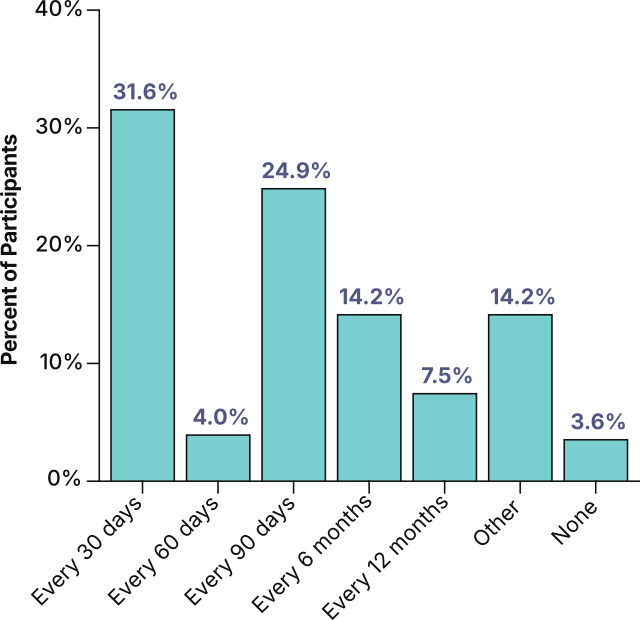
The majority of RARE participants visited their medical care team every 30 days (32%) or every 90 days (25%). Participants with mucosal melanoma (40%) were most likely to visit their medical care team every 30 days compared to those with acral melanoma (25%) or cutaneous melanoma (22%).
Most participants (87%) indicated satisfaction with the frequency of medical monitoring, whereas 12% felt monitoring was too limited and 1% felt it was too much. Visits were most frequently with medical oncologists (68%), dermatologists (65%), surgeons (32%), and primary care physicians (27%), among other physician specialties.
Participants’ interest in participating in a clinical trial varied across melanoma subtypes. Those with acral melanoma (37%) and mucosal melanoma (34%) expressed the greatest interest in participating in clinical trials compared to those with cutaneous melanoma (22%).
Participants identified several barriers to clinical trial participation, including most frequently that clinical trials were not mentioned as a medical care option (54%), and that individuals with acral and mucosal melanoma often did not meet eligibility criteria for available trials (40% and 48%, respectively). Participants also described difficulties finding a trial that was right for them (8%) and had concerns about side effects (7%). Concerns about receiving placebo in a clinical trial (6%) were also noted.
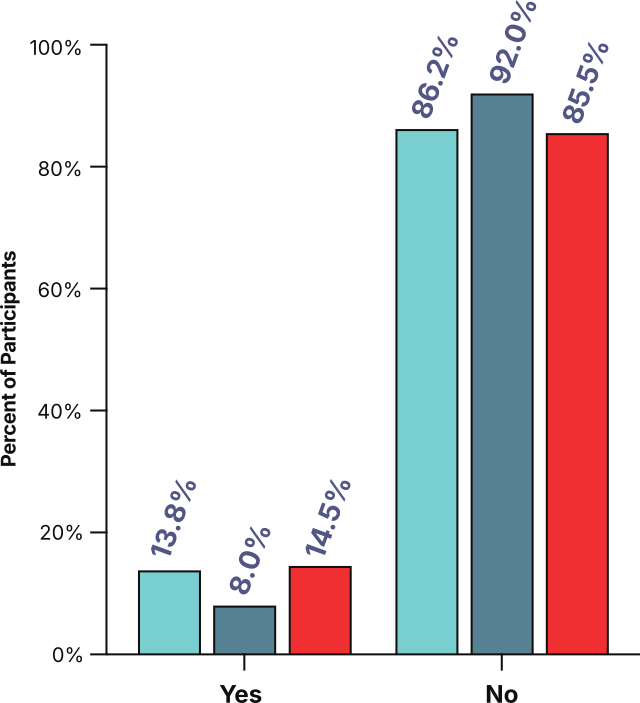
Approximately 15% of participants with mucosal melanoma, 14% with acral melanoma, and 8% with cutaneous melanoma had enrolled in a clinical trial. Of the participants that enrolled in clinical trials, the average distance traveled to participate in the trial was 370 miles.
Through RARE, participants have the opportunity to receive announcements for clinical trials. To learn more about clinical trials and the critical role they play in advancing research and patient care, visit: curemelanoma.org/clinicaltrials.
In order to have productive discussions with medical providers and be able to make informed care decisions, every patient should have clear information on all treatment possibilities, including clinical trials. Educational material such as webinars and FAQs can be found at curemelanoma.org, as well as across other advocacy sites and clinicaltrials.gov.

