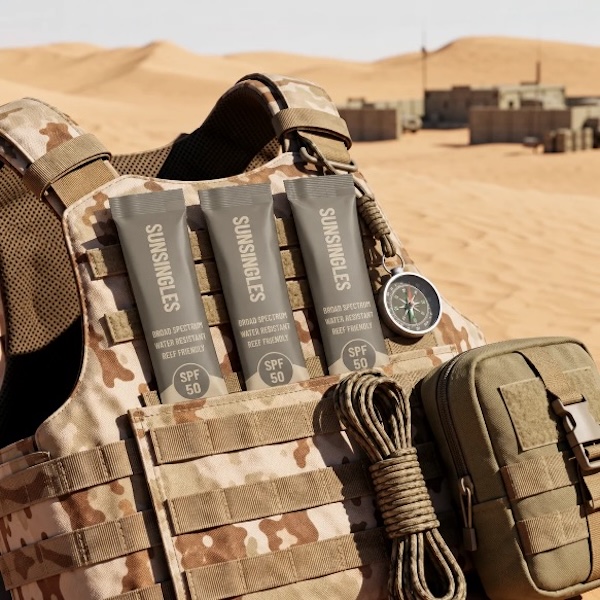
U.S. military personnel and veterans face unprecedented risks to protect our country and freedoms. SunSingles started with a simple goal in mind: to protect those who protect us. By creating single-use sunscreen packets that easily fit into U.S. military-issued packs, former Military Sergeant Lawrence Butts, former Navy SEAL Bear Handlon, and Brayton Carlson aim to consistently keep our troops sun-safe, whether they are out in the field on a mission or participating in a routine training exercise.
Lawrence Butts and Brayton Carlson met working in the medical sales industry in Denver, Colorado. Both were former athletes who immediately bonded over their competitive experiences in sports and their utmost respect and passion for those in the military. Lawrence also brought the added dimension of his experience serving in the Army as a Sergeant to their work. One day over breakfast (coincidentally after providing education at a VA hospital), they found themselves discussing their futures and realized they shared an additional trait: entrepreneurial mindsets.
“I asked Lawrence when he was overseas in the Army, whether there was an area he noticed where we could improve a product or access to a product for the troops. The first thing that came to his mind was sunscreen.”
More specifically, access to sunscreen. Prior to their initial research, Brayton and Lawrence assumed with the military and government historically prioritizing innovation, a sunscreen product maximizing ease-of-use must already exist. Yet the deeper they delved, the quicker they realized there was not a single-use sunscreen option anywhere in the military.
“It's so simple and practical, and sometimes those are the best solutions.”
An article titled "We Can Do Better at Protecting Our Service Members from Skin Cancer" published by MAJ Alexandra Rosenberg, MC, USA and COL Sunghun Cho, MC, USA in the journal Military Medicine further fanned the flames of their idea. It addressed the alarming reality that U.S. military service members suffer from higher rates of skin cancer than the general public. Motivated by this information and combined with Lawrence’s first-hand experience serving the country, they were completely committed to their new mission.
Lawrences noted, “During my deployment to the Middle East in a combat arms capacity, I was exposed to extreme sun every day, yet reliable sun protection was difficult to find. There was no simple, convenient option for service members in the field. SunSingles was created to solve that problem.”
The U.S. military already provides troops with many items and ways to protect their health and keep them safe. Based on all the research available, why not also provide them with sunscreen? According to Bear, “USSOCOM’s own cancer study found that special operators have a 33% higher rate of melanoma than the rest of the force. That’s our community. The good news is that melanoma is one of the most preventable cancers, and SOCOM’s guidance is simple: protect your skin. But in the field, ounces equal pounds, and a bulky sunscreen bottle was never making the cut. SunSingles change that, with lightweight, compact sun protection that’s easy to carry and use in the field.”
In addition to safeguarding active-duty military personnel, SunSingles recognizes that veterans are so often a forgotten segment of our society and wanted to not only simplify and increase sunscreen access for personnel while in service, but also to increase overarching skin cancer awareness and accessibility for those who served. Many new products are designed and manufactured in size, shape, and packaging to maximize access and integrate easily into our daily lives. UV rays are an invisible form of radiation ever-present outdoors during daylight, even on cold, windy, or foggy days. Why not simplify sunscreen so that it is easy and convenient to carry and use?
When discussing the tie-in between SunSingles and the veteran community, Brayton emphasized, “We have great admiration for veterans, what they have done, and their selflessness. They are the reason we pursue this mission as small business owners. We are super appreciative for their sacrifices.”
SunSingles had no plans to launch a consumer version until they later discovered that everyday consumers faced the same challenges with access to sun protection. After reading a study wherein inconvenience was rated as a top reason for not wearing sunscreen, they reconsidered. Examining what Liquid IV did with hydration, SunSingles aimed to follow suit. Liquid IV didn't necessarily reinvent hydration; they reinvented the delivery mechanism to prioritize convenient access.
“It often comes down to convenience. We were recently on a trip to Denver and went to a local ski shop. They had full-sized bottles of sunscreen, and the shop manager told us they rarely ever sold.”
The potential to increase sunscreen accessibility, whether at ski resorts, hotels, golf courses, or public parks, has further illuminated key intersections where the SunSingles products add unique value. Travel is another growing segment, especially destination events like outdoor athletics and weddings. Furthermore, SunSingles aims to not only solve packaging for sunscreen but hopes to address underling behavior changes in consumers. When someone is on the golf course, the last thing they want to do is carry around a large bottle on top of everything else. Removing that friction for the consumer, regardless of the scenario, has been crucial to their growth.
One ubiquitous challenge SunSingles has encountered is misinformation around sunscreen. With wrong and misleading information clogging so many communication channels, they encourage anyone who may have concerns or questions about sunscreen safety to reach out to dermatologists in their community for guidance and clarity. Many dermatologists often say the best sunscreen is the one you will wear.
First and foremost, SunSingles aims to protect military personnel by becoming an official sunscreen provider for the military. That connection is incredibly near and dear to their hearts and underpins the foundation of their work. Secondly, they want to continue to learn and grow in the consumer space, in part, by spreading the word that SunSingles solves the access and convenience challenge for everyone, regardless of the situation.
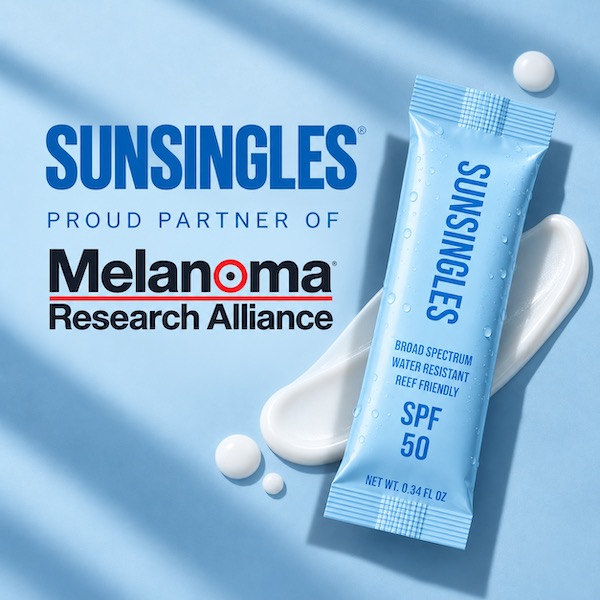
“MRA does a phenomenal job in the skin cancer and military communities, and we sincerely hope to continue to grow this partnership as we continue to grow as a company.”
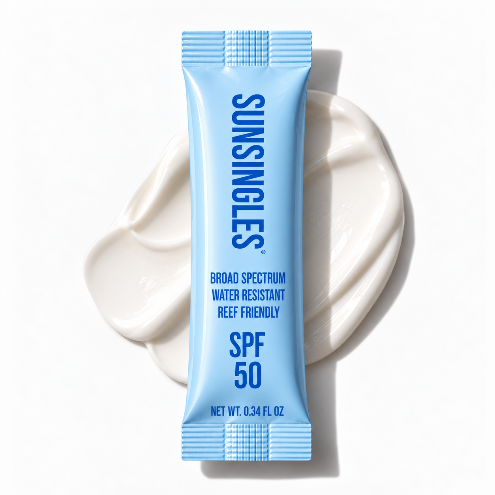
Skin cancer is often preventable. Wearing sunscreen is such a simple practice, and SunSingles makes it even easier. Tear a packet open and apply it. The process takes approximately 30 seconds. With all the harmful things out there in this world, please do not let skin cancer be something that affects you or your loved ones.
Brayton concluded, “My aunt was diagnosed with melanoma, so I know the risks and reality firsthand. I'm also a redhead, so I'm aware of what the sun can do and the impacts of long-term sun damage. Buy sunscreen and wear it consistently.”
MRA is fully committed to advancing research and improving outcomes for all people affected by melanoma, including the military and veteran community. Military service involves a unique set of challenges, and one often overlooked is the increased risk of melanoma and other skin cancers. Compared with the general population, veterans face a nearly 18% higher risk of being initially diagnosed with Stage 3 and a 13% higher risk of being initially diagnosed with Stage 4 melanoma. Sun exposure and lack of protection from UV rays, potential exposure to carcinogens and various chemicals, and overall demographics of the veteran population may play a role in this increased risk.
A study published in JAMA Dermatology earlier this year analyzed data from 2000 to 2024, comparing 1,292 veterans diagnosed with acral melanoma to 5,168 veterans without melanoma. This research, supported by the Melanoma Research Alliance, the Department of Defense, and the Department of Veterans Affairs Cooperative Studies Program, found that veterans with documented Agent Orange exposure had approximately 30% higher odds of developing acral melanoma. Sometimes referred to as acral lentiginous melanoma, it develops on the palms of the hands, soles of the feet, or under the nails and is not believed to be caused by UV radiation. Because it occurs in less visible areas and may not resemble more common melanomas, it is often diagnosed at more advanced stages and is associated with poorer outcomes. These research findings can help inform earlier recognition and diagnosis among veterans and other high-risk populations.